By Archbishop Brad Billings
Whilst undertaking the Masters of Canon Law at Cardiff University from 2021-2023, I travelled to Wales on several occasions for intensive classes. Having gone all that way, I took the opportunity to visit somewhere in Europe I had not previously been to on the way back home. I especially enjoyed visiting places in eastern Europe.
Countries such as Slovenia, Serbia, Bosnia & Herzegovina, Bulgaria and Romania, are as rich in history and architecture, and culture and food, as western Europe, if not more so, but were largely, and refreshingly, free of crowds of tourists.
In Bucharest, Romania, I attended an Orthodox Church on a Sunday morning that could not have been more welcoming in its embrace of a stranger and outsider like me. After the (very long by Anglican standards) service a young woman, Irina, who was part of the congregation, told me about the story of her Church, and of Christianity in Romania in general.
For decades they had endured Communism and the iron rule of the dictator Nicolae Ceaușescu, when churches went underground and it was dangerous to be a practising Christian. The State, though it did not dare demolish places of worship, constructed housing blocks and other buildings around existing churches, to all but blot them out of the landscape. The evidence of this is still visible in the built environment of the city today.
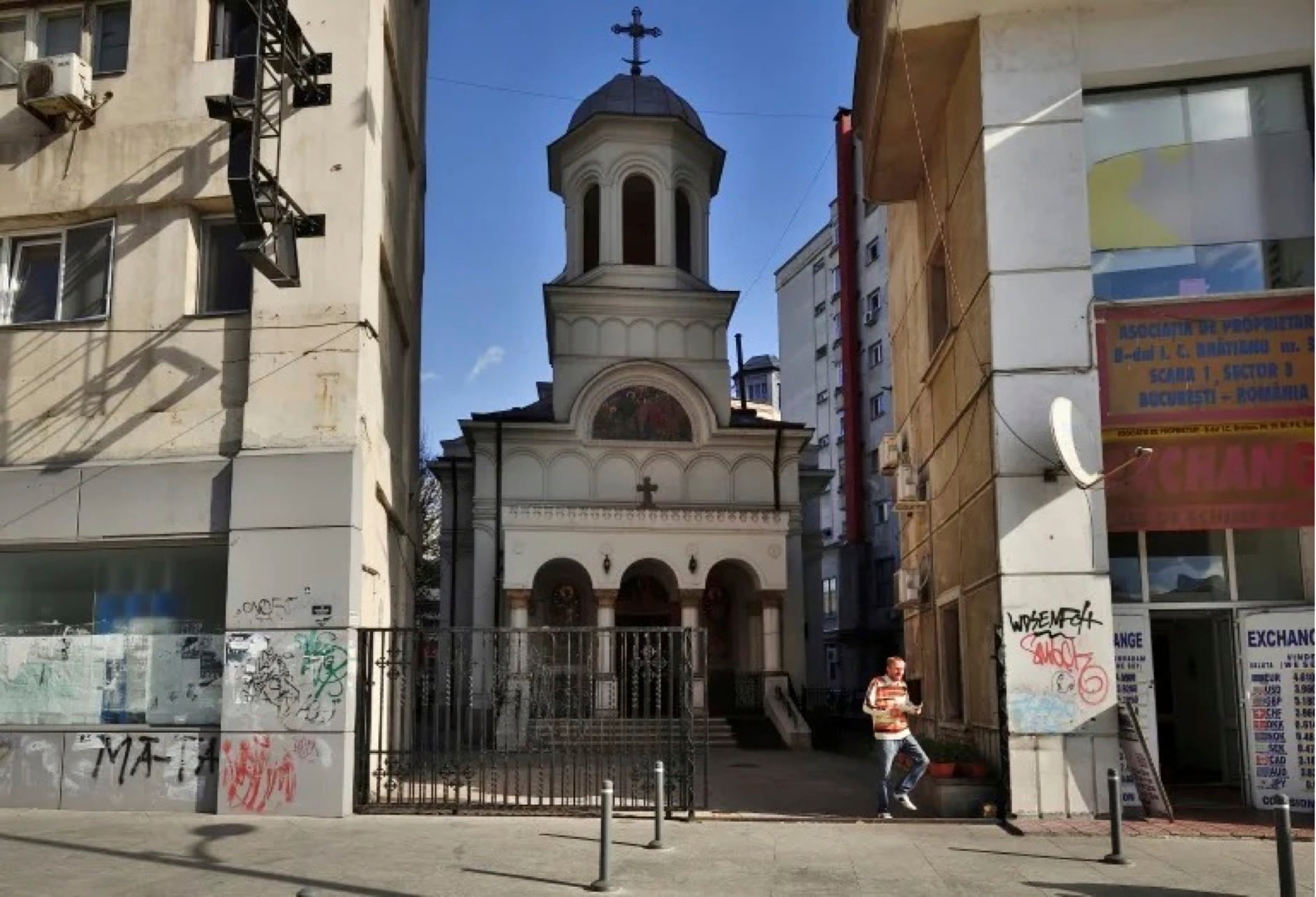
Irina and her family recalled midnight baptisms, and how worship times were communicated by word of mouth only. The State, she told me, had assumed the Church would die out when the elderly women who largely made up the congregations as the Communist era began, died out. But they kept on getting replaced by more elderly women.
When I visited Romania, Christianity was so vibrant and so public in Bucharest, there were loudspeakers mounted to the outside of churches, so that those who could not fit inside the church, and passers-by, could listen to the conduct of the liturgy. I saw many Orthodox priests, distinctive in their flowing cassocks, as I moved around the city.
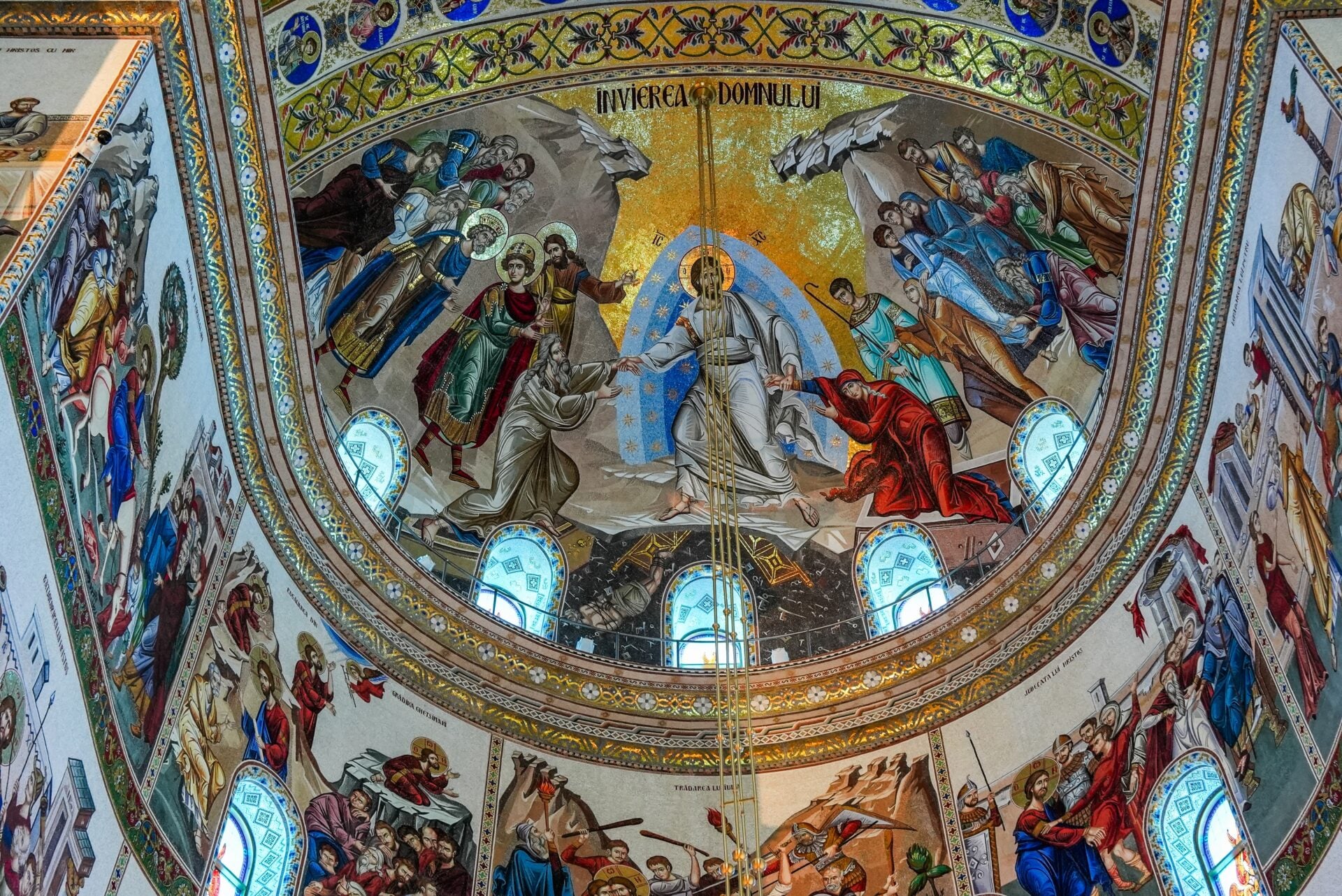
The church and its leaders, and the clergy, are today very prominent in public life and the the National Cathedral in Bucharest, also known as the Cathedral of the Salvation of the Nation, pictured at the top of this page, is the largest Orthodox place or worship in the world.
As the Acts of the Apostles commences, the disciples are given an instruction by the risen Jesus. They are told, not do anything, but to wait – “After his suffering he presented himself alive to them by many convincing proofs, appearing to them during forty days and speaking about the kingdom of God. While staying with them, he ordered them not to leave Jerusalem but to wait there for the promise of the Father” (Acts 1.3-4).
We often skip over this, waiting for the action (‘the acts’) to commence. But it is very important. The disciples are to wait, and to pray. During this time, they are described as “constantly devoting themselves to prayer” (Acts 1.14). As the story of the Acts commences the disciples are waiting to be “clothed with power from on high” as Jesus had promised (Luke 24.49), and this of course occurs with the coming of the Holy Spirit on the Day of Pentecost (Acts 2). Andrew Root, in his latest book (‘Evangelism in an age of despair, Baker Academic, 2025) emphasises this.
The lesson I see here is a profound, and an important one. God will keep and sustain the church, and will give the increase in God’s time.
The waiting, and the praying, is important, and comes first. It is not human action that grows the church, but divine action. The Lord daily adding to the number of those who were being saved (Acts 2.47) comes after the waiting and the praying, and after the divine action of God through the coming of the Holy Spirit.
The Church in Romania survived the decades of oppressive rule by remaining faithful. It waited and it prayed. And it kept on being Church, even in difficult, and at times dangerous, circumstances, and even though it knew the ruling authorities wanted it to die.
The lesson I see here is a profound, and an important one. God will keep and sustain the church, and will give the increase in God’s time. Our role may not be to respond frantically to what we perceive to be the crisis engulfing the church, whatever that criss may be this week. It may just be to wait, and to pray, to remain faithful and to trust God.
One of the things I am especially attracted to in the ‘Leading your Church into Growth’ resource we will be bring to Adelaide early next year (5-6 February 2027) is that everything it offers proceeds out of prayer. The message is, if it seems like there is nothing we can do at this time, we can still pray!
As St Paul asked the Corinthians – “What then is Apollos? What is Paul? Servants through whom you came to believe, as the Lord assigned to each. I planted, Apollos watered, but God gave the growth. So neither the one who plants nor the one who waters is anything, but only God who gives the growth” (1 Corinthians 3.5-7).