Jude Benton arrives at St Barnabas College with a remarkable backstory — and a passionate vision for how the church prepares its clergy.
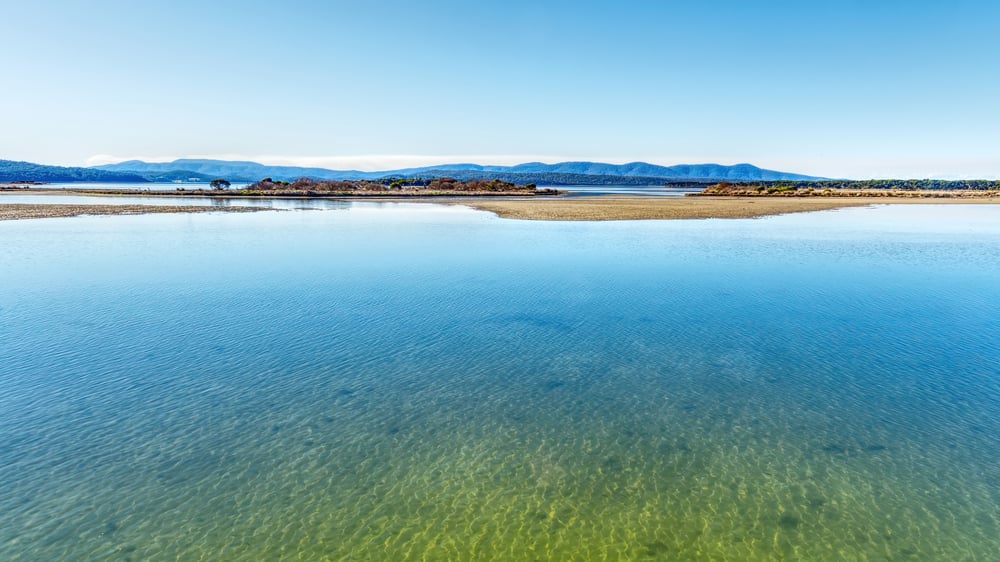
There is a moment Jude Benton returns to when she explains why she is here. It was New Year’s Eve 2019, and the town of Mallacoota on the far east coast of Victoria was ringed by fire. Rather than evacuate, she stayed — taking a boat out to the middle of the lake to wait out the flames, then coming back in to be with her community.
“I knew my place was to stay and to serve,” she says simply. “God calls us to remarkable places — that sense of being in the right place at the right time. The whole Esther thing: you are here for such a time as this.”

Six years on from those fires, Jude has arrived in Adelaide to take up the role of Coordinator of Ministry Discernment and Formation at St Barnabas College. It is a position that draws directly on everything those years in Mallacoota taught her — about resilience, about community, and about the gaps in how the church trains its priests.
Originally from Marlborough in New Zealand’s Nelson Diocese — “where the wine comes from,” she notes — Jude has been in Australia for 12 years. For eight of those she served as parish priest at St Peter’s Mallacoota and St John’s Cann River, in the cooperating parish of Croajingolong.
It is a remote and beautiful corner of the country: the southeasternmost point of mainland Australia, where the land bends toward the sea. The cooperating parish — Anglican and Uniting together, supported by Bush Church Aid — was the only church of any denomination within more than an hour’s drive.
A diverse community held together by faith
With a permanent population of around a thousand, Mallacoota was a place where the distinction between congregation and community largely disappeared. “The town itself was the congregation in a way,” Jude says.
The parish drew people of many denominational backgrounds and theological perspectives, requiring her to hold a diverse community together around a shared faith — experience that has directly shaped her thinking about ministry formation.
Then came the fires. The Black Summer of 2019–20 left Mallacoota isolated and traumatised. Tourists who had filled the town for the holiday season found themselves stranded; the Navy was called in to evacuate those who needed to leave. Jude and her husband Andy lost their fences, their garage and their back garden, but the house stood.
The recovery that followed — of the land, and of the people — became the subject of a documentary, The People’s Republic of Mallacoota, which filmed in the town over 18 months and is now available on both ABC iView and Netflix, with Jude among those featured.
Hard questions about training clergy
The experience set her on a new path of inquiry. Over the past four years, alongside her parish work, she has been studying psychology and researching post-disaster recovery — and asking hard questions about the training of clergy.
“As a parish priest for 12 years, I’ve become very aware of how much there is to learn that, had it been included in training and formation, may have made ministry easier, or at least meant I was better prepared,” she says.
The disciplines she has in mind go beyond theology: dealing with trauma, navigating conflict, working with difficult people, and — perhaps most importantly — the capacity to hold true to your own identity and vocation when the parish you enter does not always reflect who you are or what you would choose.
“My hope in this kind of role is to help people really look at who they are in ministry, and how we work together for the common good — for the good of the church and God’s people, as well as the good of the wider communities into which we live and work.” she says.
Though she has left Mallacoota, she has not entirely let it go: she and her husband have managed to buy a house there, part of which they rent and part of which they plan to use as a holiday home. For those curious to know more about the place that shaped her, she recommends the documentary as the easiest introduction.
Now settled in Adelaide and finding her feet at St Barnabas, Jude brings with her a rare combination: the pastoral depth of remote, demanding ministry; the intellectual rigour of serious academic study; and the lived knowledge of what it means to serve a community through its darkest hours. It is, you sense, exactly the kind of formation she wishes more clergy could receive.