By Dr Sarah Black, Archivist, Adelaide Anglican Diocese
To mark International Women’s Day, we focus on a woman who provided hope for orphaned girls in a harsh colonial world
Sarah Howard was born in 1809 in Lancashire, UK and grew up in Middlesex where her father worked as a plate glass manufacturer. Little is known of her early life, but she grew up to become a strong and energetic woman. In 1833 she married widower Thomas Birt, acquiring three stepchildren and going on to bear a further six between the years of 1834 and 1843, for a total family of nine children.
For about 20 years Sarah and Thomas were the master and matron of the Biggleswade Union Workhouse, home to some 300 souls, in Bedfordshire UK, where they lived with their increasing brood. (In the historic hailstorm of 1841, with hailstones up to 20cm in diameter, over 1300 panes of glass were broken at the Biggleswade Workhouse. What a mess!) In 1855 the Birt family migrated to South Australia.
Thomas took a range of other jobs including schoolmaster and bank clerk, but it seems that Sarah had already found her calling. When in 1856 the Female Refuge was founded (by a non-denominational committee of citizens headed by Bishop Short), Sarah was appointed its first matron.
This institution was an effort to divert women and children from the appalling conditions of the governmental Destitute Asylum. The sad fact of colonial life in early South Australia is that it was hard, and uncertain, and that families sometimes paid the price. Fathers and mothers died in accidents, misadventures, killings, epidemics and many other tragic circumstances, leaving their children vulnerable and with few options. At the Female Refuge Sarah worked with women and children for three years, before leaving to become the matron of the Orphan Home (later known as Farr House). The Orphan Home was similarly intended to house as many parent-less and impoverished little girls as possible in home-like surrounds, rather than in the degradation of the Destitute Asylum.
Mrs Birt seems to have been a firm negotiator who knew her own worth. She rejected the committee’s initial job offer as they would not agree for her sons to live in at the institution, which was an orphan home for girls only. The committee readvertised the position but returned to Mrs Birt within two weeks as clearly their best option. They appointed her Matron and her daughter Mary governess (or teacher) at the combined salary of fifty pounds a year (presumably plus lodging for the whole family as required).
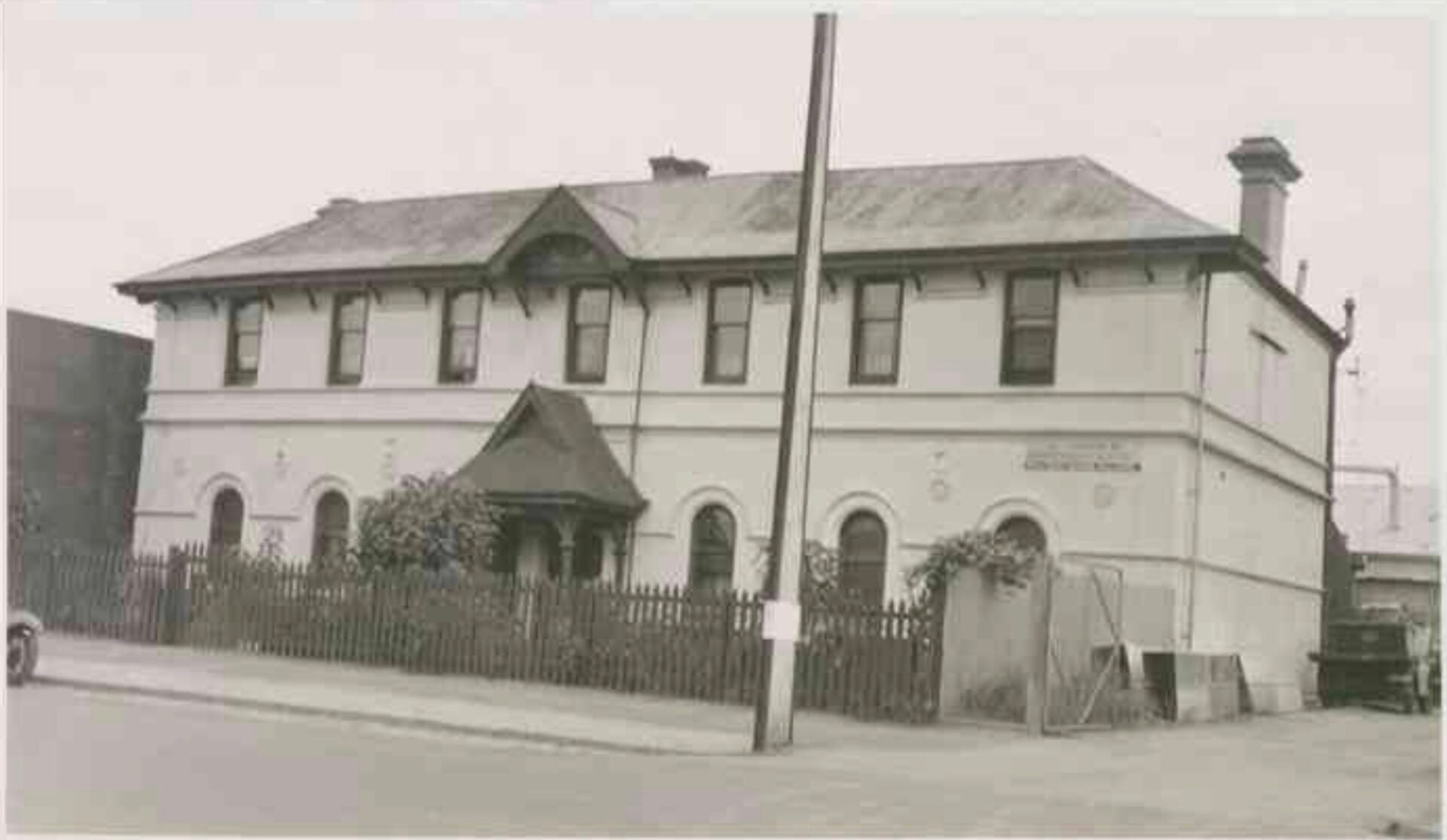
The Orphan Home had previously been a small enterprise run in a private home, but Mrs Birt established it on a larger scale in new premises at the former German Hospital in Carrington Street, pictured above. Here she and Mary remained for 21 years until her retirement at the end of 1882. It was a time of growth, harmony and consistency for the Orphan Home under their “benevolent rule”. For Mrs Birt it was a time of unfailing busy-ness.
Alongside the big picture of providing “board, clothing and useful and religious education” to her ever growing and changing family of orphaned girls, there was the daily round of “carrots wood water shoelaces shoemaker” etc (1861), building maintenance, and the vagaries of public health and life to deal with. In 1864 the committee gave thanks that “during a season of so much sickness and mortality, their little family has been preserved in good health.” This was “due in a great measure to the care of the Matron, whose attentive and economical management the Committee have much pleasure in acknowledging”.
Creating a real home for orphan girls
How do you adequately prepare 19th century orphan girls for the life they will lead? Mrs Birt taught them domestic skills, in the knowledge that the majority of them would eventually enter domestic service as their means of self-support. In 1866 the Committee reported themselves “especially pleased with the attention paid by the Matron to the needlework which is remarkably good.” It was a struggle to keep the facilities up to scratch but the girls received periodic holiday trips to Glenelg, visits from performers such as ventriloquists for entertainment, and other treats from wellwishers. Girls were encouraged to look upon the home as their own home, to keep in touch after leaving and to return when needed for “counsel or protection”.
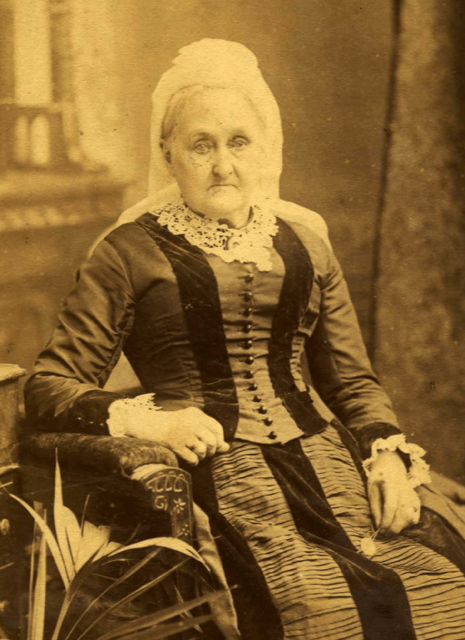
When she retired in 1881, the year after her husband’s death, Mrs Birt stayed living at the home for some years. Later she moved in with another daughter, Margaret, at Payneham, where she was strongly involved with the development of St Aidan’s Payneham.
Faithful, intelligent, authoritative, farsighted
After her death in 1890 aged 81, she was commemorated with a sermon at St John’s Halifax St, which had enjoyed very close relations with the Orphan Home since its move to the city all those many years ago. the Rev Canon Frederick Slaney Poole, the rector of St John’s, referred to Mrs Birt as “a Mother in Israel”, drawing on the biblical story of Deborah as a strong and nurturing leader – faithful, intelligent, authoritative, farsighted. Mrs Birt was, to add to these gifts, also eminently practical. She exercised a significant formative role in the very beginnings of social welfare service provision in the colony of South Australia.
A plaque at St Aidan’s Payneham was likewise inscribed: “In Ever Blessed Memory of Sarah widow of Thomas Birt born April 15th1809 died August 4th 1890. ‘A Mother in Israel’.”
Many years later, in 1926, Canon Poole returned to his theme in a newspaper series reflecting on the old days of St John’s, including its relationship with the Orphan Home. He said, “The good work of such an institution depends not mainly or chiefly on the official management, but upon those who control the inner life and work of it. In this respect the Orphan Home Committee was extremely well guided and fortunate … in finding as its matron so dear, kindly, loveable, and effective a lady as Mrs Birt”.
Information from the diocesan archives, Trove, Mabel Hardy The First Hundred Years of the Orphan Home (1960) and from https://trevenenfamilyinaustralia.wordpress.com/howard-story/ Thanks to Jo Shaw for permission to include the photograph of Mrs Birt.