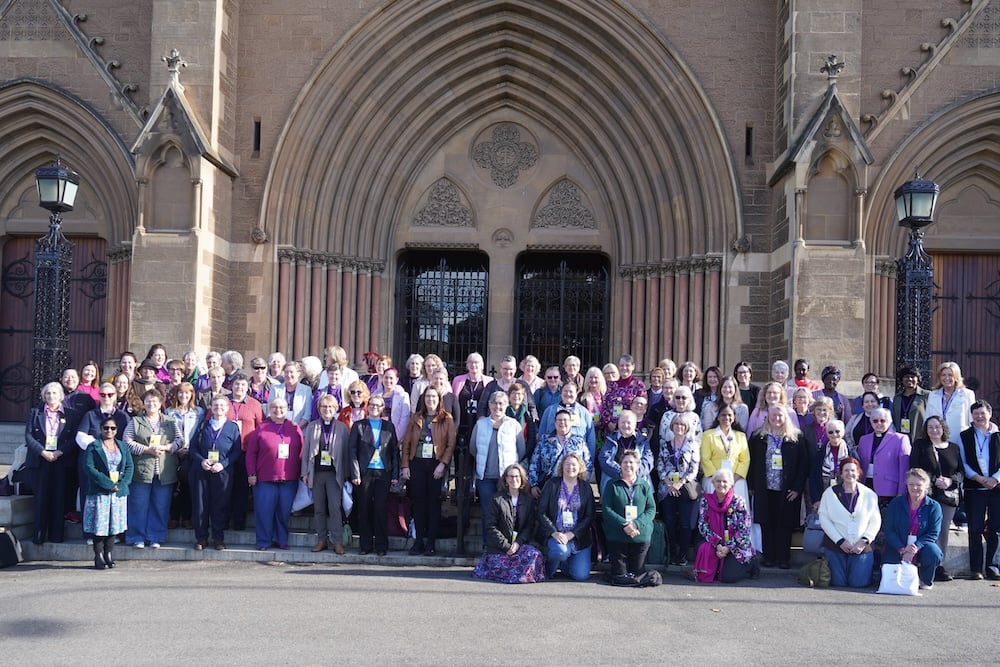
More than a hundred Anglican clergywomen from across the country have converged on Adelaide this week for Blessed is She, a three-day conference running from Thursday 27 to Saturday 29 August at St Peter’s Cathedral and St Mark’s College.
Tickets sold out within days of release, leaving a months-long waitlist — a sign, organisers say, of how urgently the gathering was needed.
The idea traces back to 2022, when Archbishop Kay Goldsworthy of the Perth Diocese told Adelaide’s 30th-anniversary celebration of women’s ordination that Australian Anglican clergywomen could be “a short-lived reality” in the church.
That warning, together with the Canberra–Goulburn diocese’s 2024 report Addressing Disparity, which documented a steep decline in female rectors and found 18 of Australia’s 23 dioceses without a female bishop, prompted the Movement for the Ordination of Women to ask every diocese to take stock of its own record.
In Adelaide, Bishop Sophie Relf-Christopher and Kathryn Pugh designed an anonymous survey mirroring that research.
The results, unpacked with journalist and author Dr Julia Baird, who has tracked the uneven progress of women’s ordination since its early years, were a mixed picture: 96 per cent of respondents felt Adelaide’s culture broadly supported women’s ministry, yet 75 per cent had personally experienced hostility to it.
From those findings came a wish list — inclusive language and theology, safer workplaces, stronger networks, visible leadership and genuine professional development — that became the blueprint for Blessed is She.
Opening proceedings, Bishop Relf-Christopher welcomed delegates to the city of churches, noting Adelaide has ordained women since 1992 and that she is only its second woman bishop, after +Denise Ferguson.
When planning the conference, she had pictured 40 people fitting into a modest cathedral hall; more than 100 turned up instead.
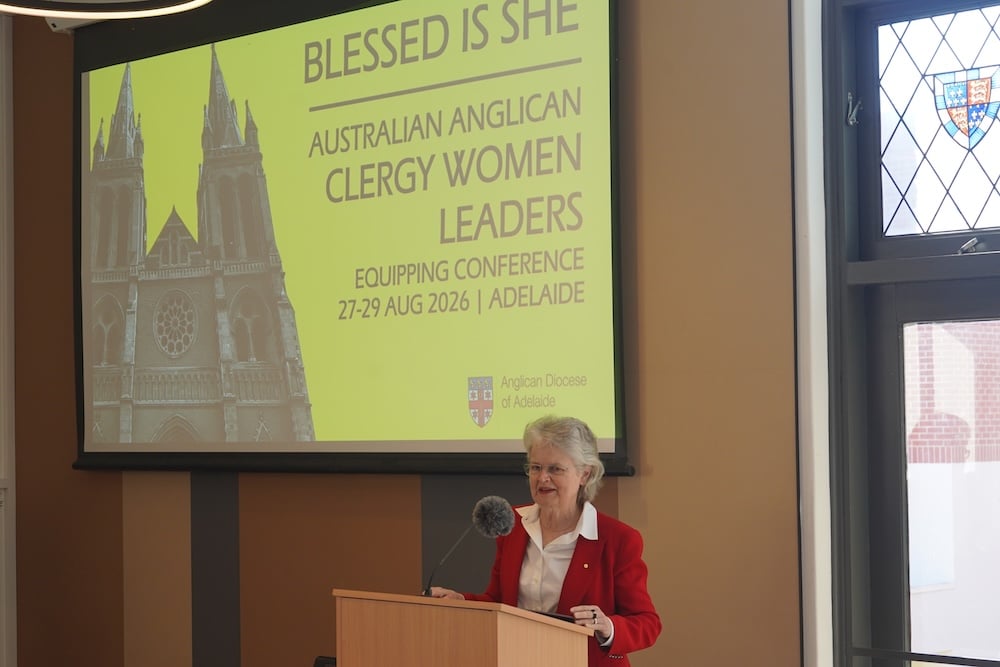
The opening keynote came from Her Excellency the Honourable Frances Adamson AC, Governor of South Australia and former Secretary of the Department of Foreign Affairs and Trade, the first woman to hold that post.
Drawing on her own career, including case studies from diplomacy and sport administration, Adamson urged delegates to collect data, build the case for equality, and confront unconscious bias.
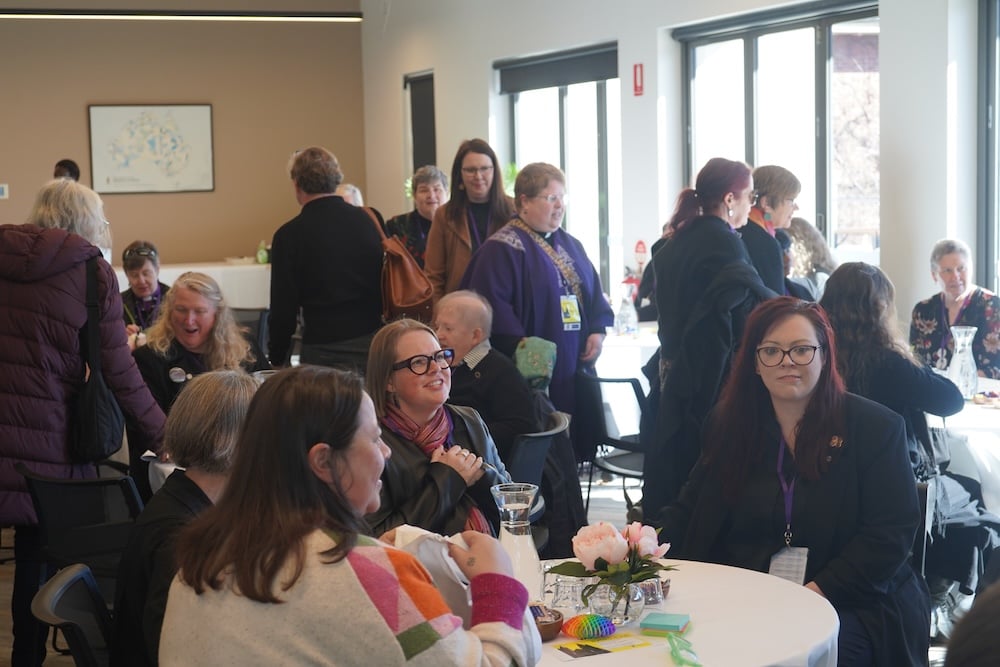
Over the following two days, the program turns to Archbishop Kay Goldsworthy’s keynote “For such a time as this”, Bishops Vanessa Bennett and Genieve Blackwell on systemic change, historians Dr Sarah Black and Dr Janet Scarfe on the history of women’s ministry, and a Bishops’ Q&A panel chaired by Kathryn Pugh.
Dr Julia Baird closes the conference on Saturday with a session titled “The courage to keep going”.
Between sessions, delegates are taking part in mentor walks, leadership workshops and shared bible study — building precisely the kind of network the 2022 warning suggested the church could no longer take for granted.