By Sarah Black, Diocesan Archivist.
This week marked the World Day to Combat Desertification and Drought on 17 June, a subject the Church in South Australia was forced to grapple with from the middle of the 19th century.
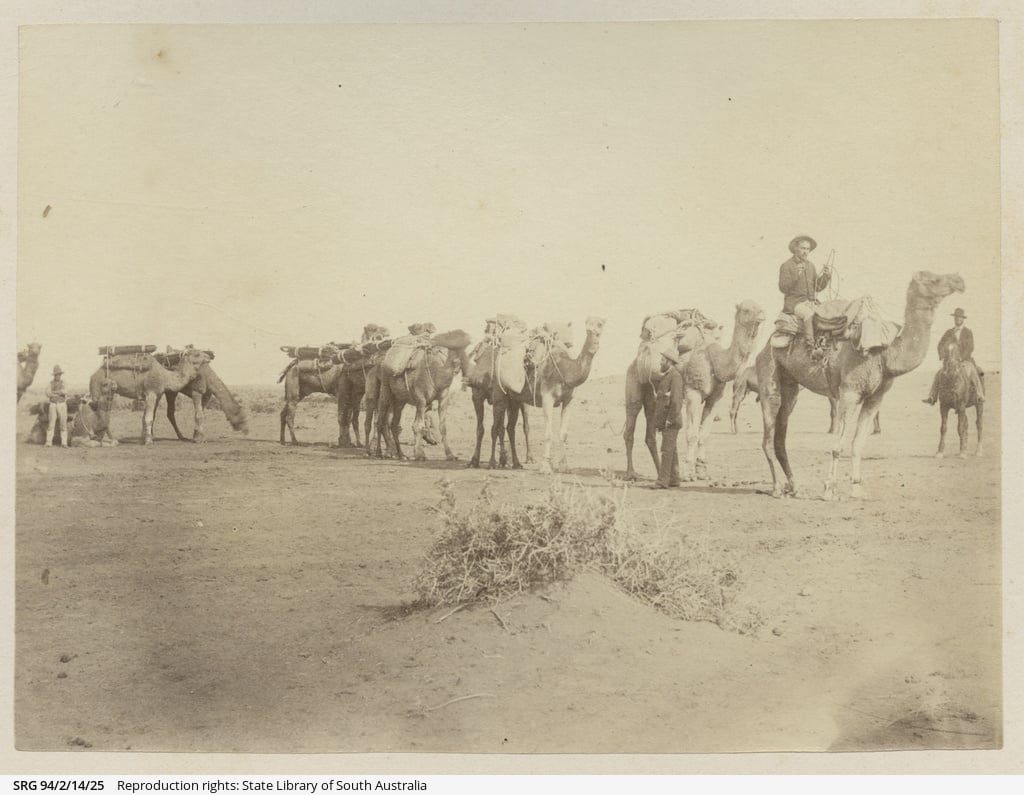
The arid interior of South Australia presented new opportunities and new challenges for church ministry with early pioneers of the church often using camels to access the region.
The township of Farina was established in 1878 under the hopeful motto of “rain follows the plough”.
Farina was needed as a hub for the telegraph, the railway and other government services and became home to a multicultural mix including First Nations people as well as European, Chinese and Afghan settlers. In its early years, on the strength of a few good harvests, it boomed.
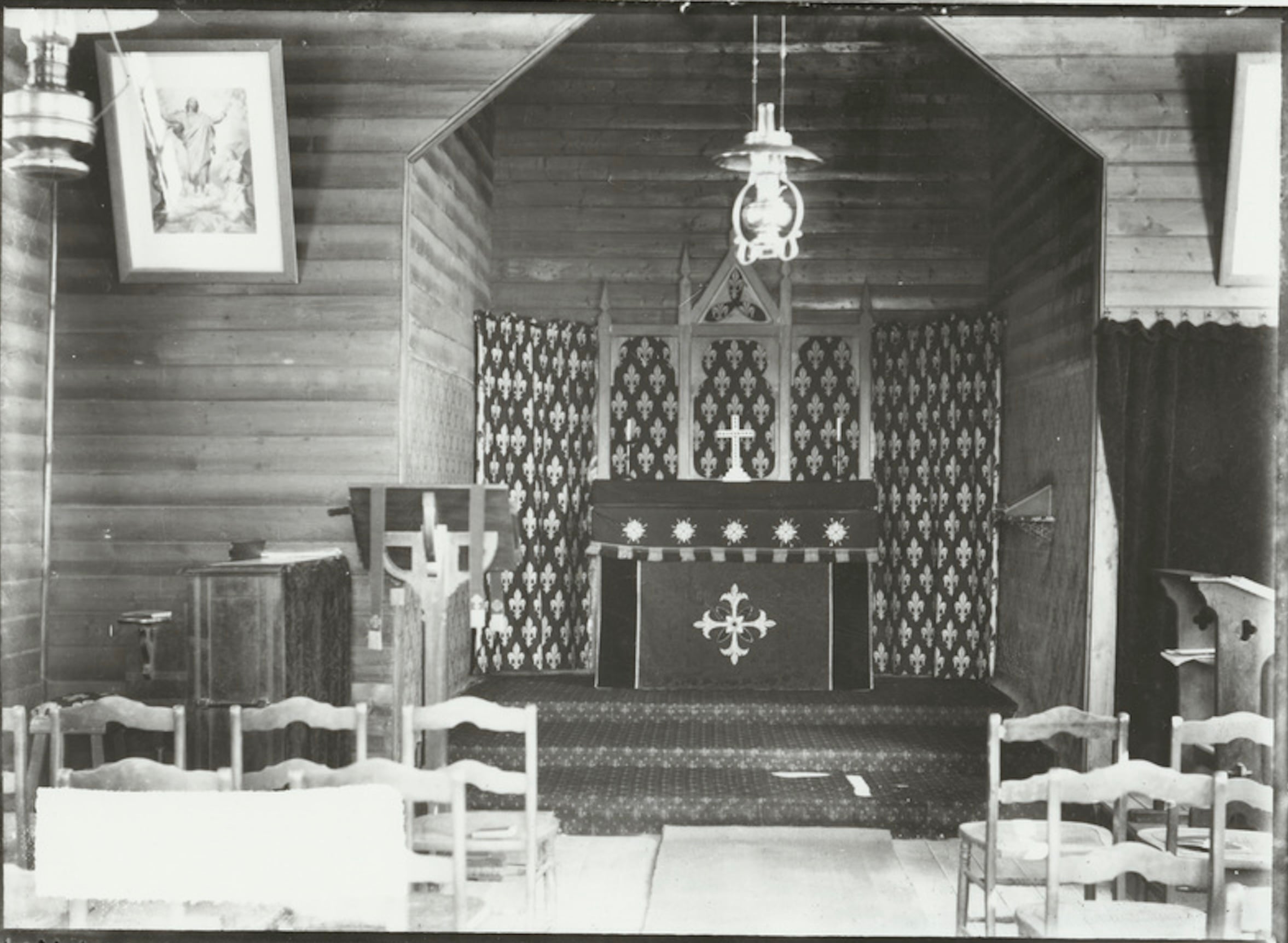
The Anglican church was active in Farina by approximately 1886 and the wood and corrugated iron church of All Saints was opened in 1890. (Imagine how hot that must have been on a summer Sunday!)
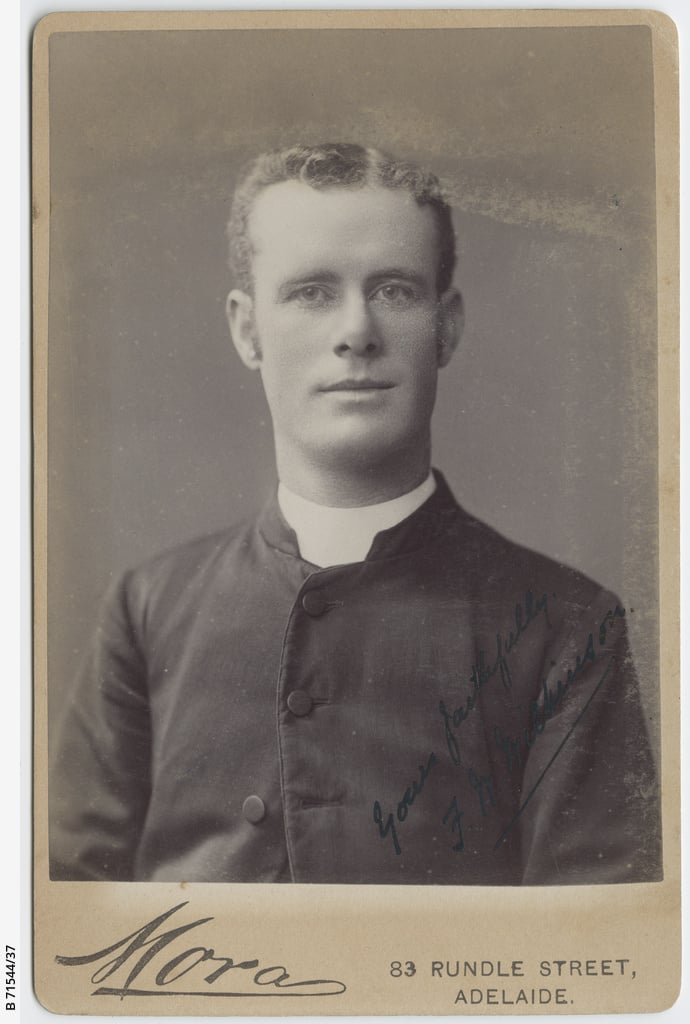
Services were held by laypeople and visiting clergy, but from 1895 a missionary chaplain was based at Farina, the first being the Rev’d FW Wilkinson. He was a sociable young man who loved to dance and in later years (older and wiser) wore a white pith helmet against the elements.
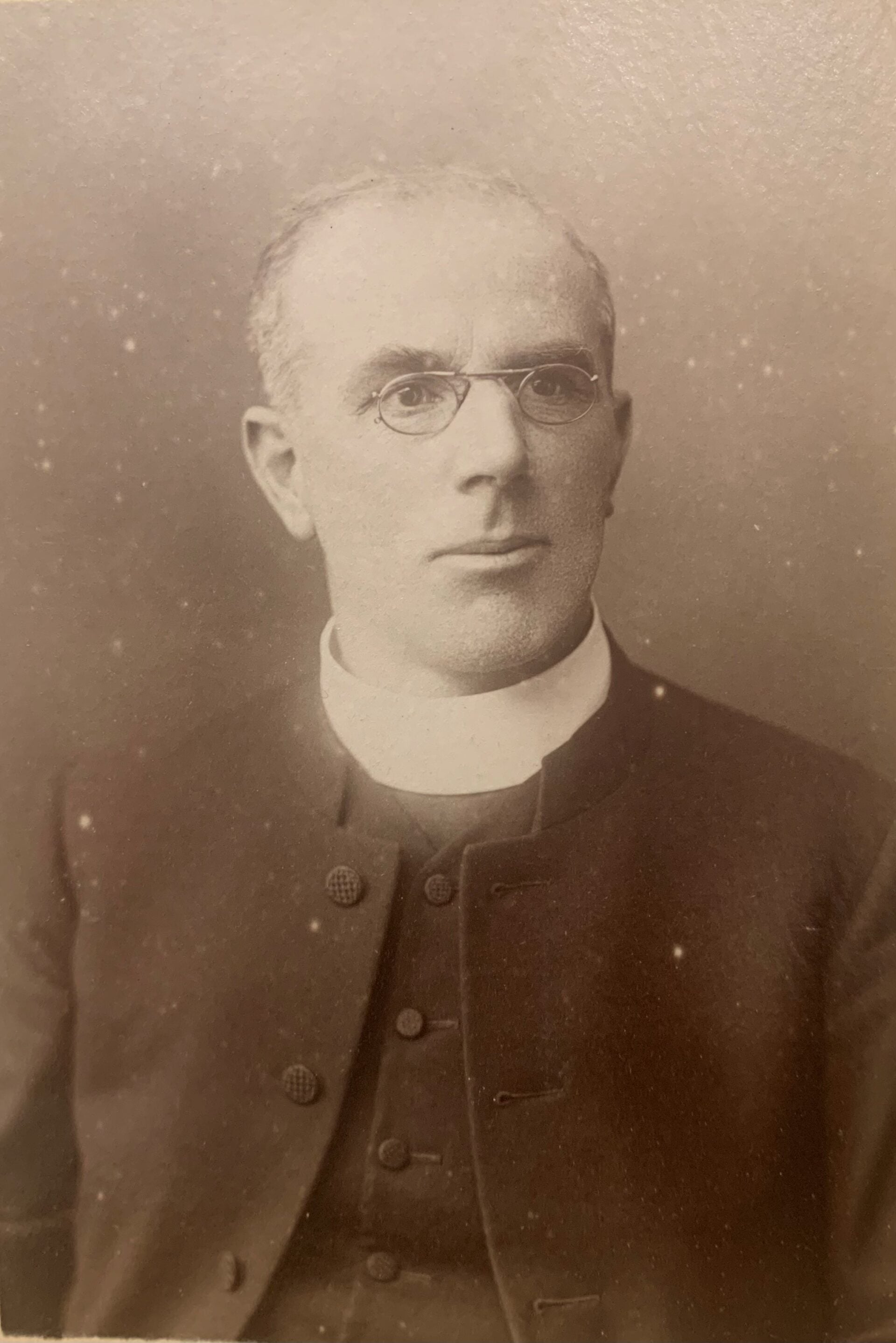
The Rev’d Fitz John Huey, from 1906-1917, was a significant contributor to the church at Farina. Ordained in 1905, Huey’s ministry took him to the Yorke Peninsula and then into the desert as priest in charge of the Far North Mission.
Born in Dorset, England, as the son of a builder, Huey initially worked as a draper’s assistant before answering a higher calling. He traveled to South Australia to study at St Barnabas College, graduating in 1904.
By 1906, he was appointed priest-in-charge of the vast Far North Mission, a grueling post he held until his death in 1917. Throughout this decade of service, he ministered to isolated congregations across a massive territory—including Farina, Blinman, Beltana, Hergott Springs (Marree), and Leigh Creek—while regularly traveling along the Far Northern railway line to bring fellowship to remote railway workers.
Despite battling chronic poor health, Huey became legendary for his “unfailing courage, patience, and cheerfulness”.
He faithfully tended the church at Farina and a “Huey Memorial Cottage” was later built in his name. He threw his lot in with the people of Northern South Australia and was loved by them for it.
When the Brachina Railway Disaster of 1911 occurred (ironically, in that hot dry land, due to flash flooding washing away the tracks), Rev Huey had the misfortunate not only to be a passenger on the wrecked train, but also to have to conduct the last rites and burial of the engine driver, his friend and neighbour, Quorn resident Mr Samuel Rowe.
When Huey himself died in 1917, overtaken by a long and painful illness, the Bishop of Willochra wrote, “He has fallen as truly as any soldier on the battlefield of duty.
“For years past he literally fought for health wherewith to plead for truth and righteousness. Always cheerful, though knowing that death might come to him at any moment, his constant smile gave no hint of sleepless nights and of constant pain. Wherever he went he was welcomed and loved.”
Farina remained a small but busy centre for church activity, with annual strawberry fairs to raise money. On 14 June 1924, The Register reported, “The Bishop of Willochra (Right Rev. Dr. White), accompanied by the Rev. J. J. Emery (priest in charge of the Far Northern Mission), recently visited Farina, where the Bishop held a confirmation. The church people of Farina have thoroughly restored and renovated the church, all the work, except that requiring skilled labour, being done by voluntary workers.”
Later that same month the bishop, in appealing to Adelaide people for contributions towards Willochra’s diocesan funds, pointed out that the far northern mission “extended from Farina to Oodnadatta, and eastward to Innamincka, and the whole area yielded only £100 towards a clergyman’s stipend”.
Farina struggled with drought, with remoteness, with the development of Marree further up the railway line, and with the economic problems that came with farming north of Goyder’s Line.
It turned out that rain did not actually “follow the plough”.
After the Rev’d Joseph James Emery (1921-1937) left, church activity in Farina faded away. So did the people, who left in search of richer land, better seasons and better opportunities. The church formally lasted until 1967, but in the 1960s and 1970s the town died, reclaimed by the gibber plain that surrounded it. It was effectively lost to drought and desertification.
After closure of All Saints, Farina’s altar was sent to Leigh Creek and its font to Carrieton, then later on to Port Pirie, where it remains today.
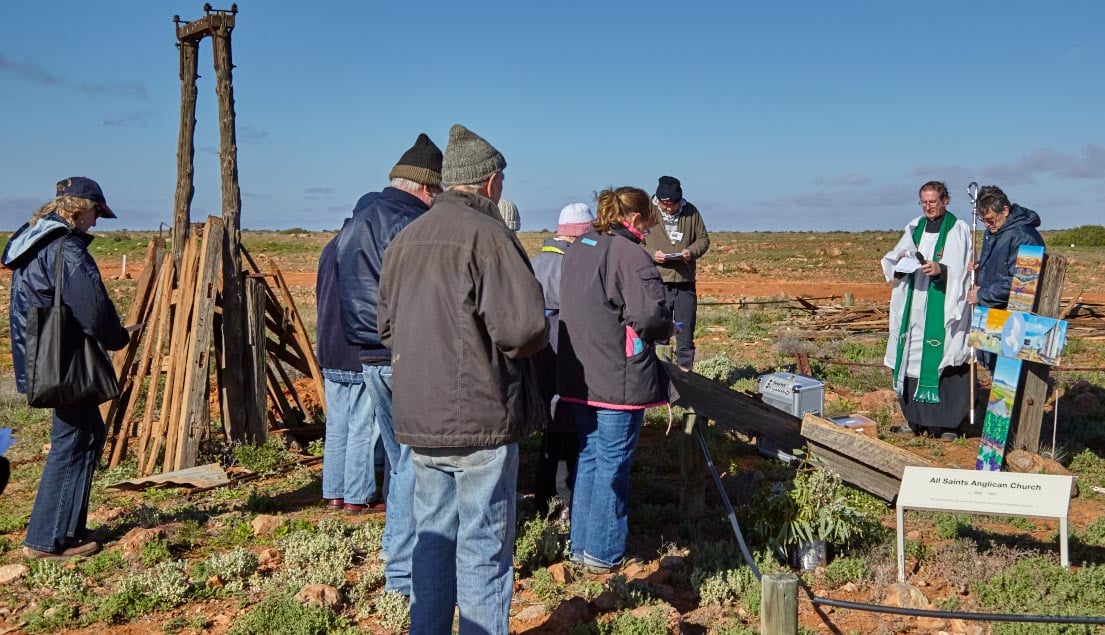
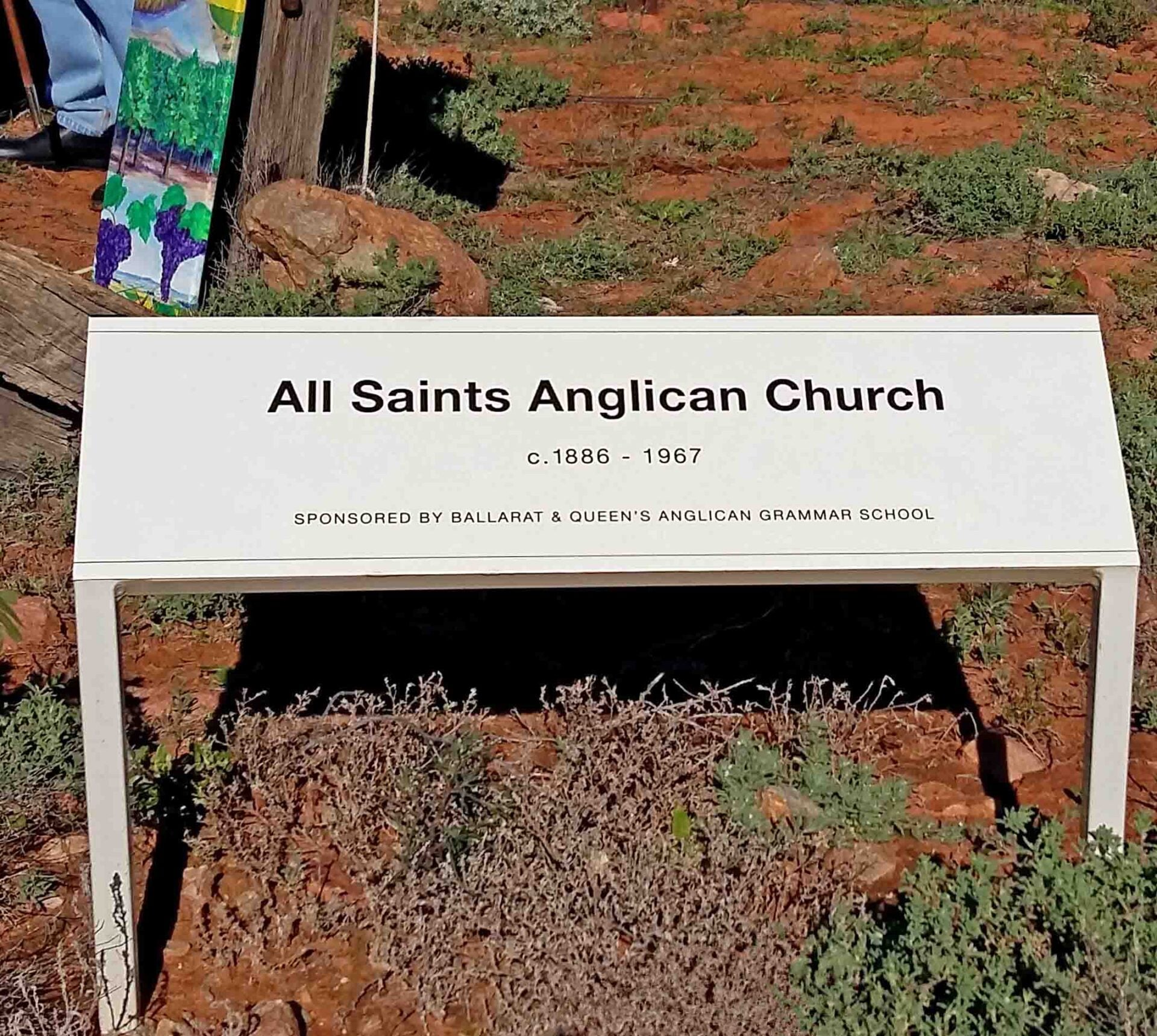
Yet the spirit of Farina, and of All Saints, remains alive. In 2015 the Revd Trevor Briggs re-blessed the remains of the church of All Saints and arranged to put up an information board.
The Farina Restoration Group has brought life back to Farina, at least seasonally, with a museum, tours and surprisingly delicious bread baked in the historic underground Scotch oven (whose early bakers, Mr FS Smith and wife Sarah, were married at All Saints in 1900).
As recently as 2021 Revd Briggs, together with the Farina Restoration Group, has held services at Farina for a variety of purposes – one being an annual memorial service for local Farina man (and St Peter’s College old boy) Flight Lieutenant John Napier Bell (1916-1940), who has the sad distinction of having been the first RAAF airman killed in World War 2.
The Farina church’s memorial cross has been returned to the town and housed at the local museum for use when needed.
What keeps Farina and the presence of the church going in this unforgiving desert environment? Two things: love and learning. We learned, over time, about the fundamental difficulties of a permanent township and of agriculture in such an environment.
The seasonal activity at Farina today reflects that learning. Beyond that, human and church endeavour at Farina, in the 2020s as in the 1920s, seems to be a triumph of spirit and of the kind of love that makes us willing to work and to give of our ourselves – the selfless spirit of volunteerism.
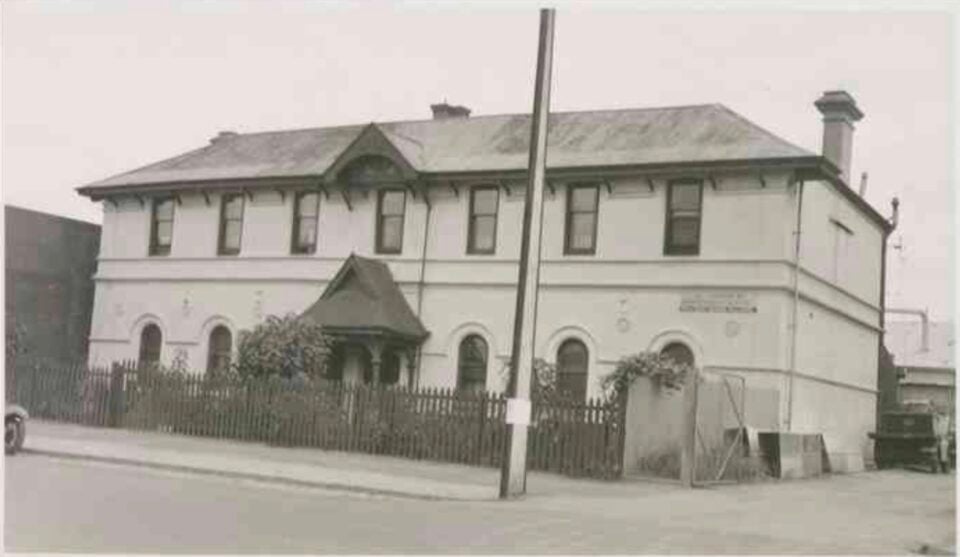
(Photos from the State Library of South Australia, the diocesan archives photograph collection, and the album of Miss Gladys Smith.)