
Australia’s new social media age restrictions change the rules for platforms — and they’re also a timely reminder for churches and faith communities to examine how they communicate with young people.
From 10 December 2025, Australian law requires major social media platforms — including Facebook, Instagram, TikTok, Snapchat, and YouTube — to take reasonable steps to prevent anyone under 16 from creating or holding accounts. For church communities that work regularly with children and young people, the arrival of these laws is an important moment to pause and ask: are our own online communication practices safe?
The Social Media Minimum Age Regulations (SMMA) place the compliance burden on the platforms themselves, which can face fines of up to $49.5 million for non-compliance. There are no penalties for under-16s or their parents if restrictions are bypassed but there are some things we can all do to lp make sure the laws address the problems.
Kooyoora, an independent non-profit organisation with a singular focus on upholding professional standards and providing safeguarding services to charitable entities, including the Adelaide Diocese, has responded to the new laws by publishing practical guidance specifically designed for faith-based organisations, schools, disability services, and not-for-profits. Their message is clear: compliance with the new regulations is an opportunity, not just an obligation.
Why this matters
Churches and youth ministries often use digital platforms to connect with young people but without the right safeguards, even well-intentioned communication can create risk.
Kooyoora recommends aligning communication practices with the National Principles for Child Safe Organisations, which emphasise child safety embedded in leadership, children’s empowerment and participation, active family involvement, and the maintenance of safe online environments.
Six practical steps for your community
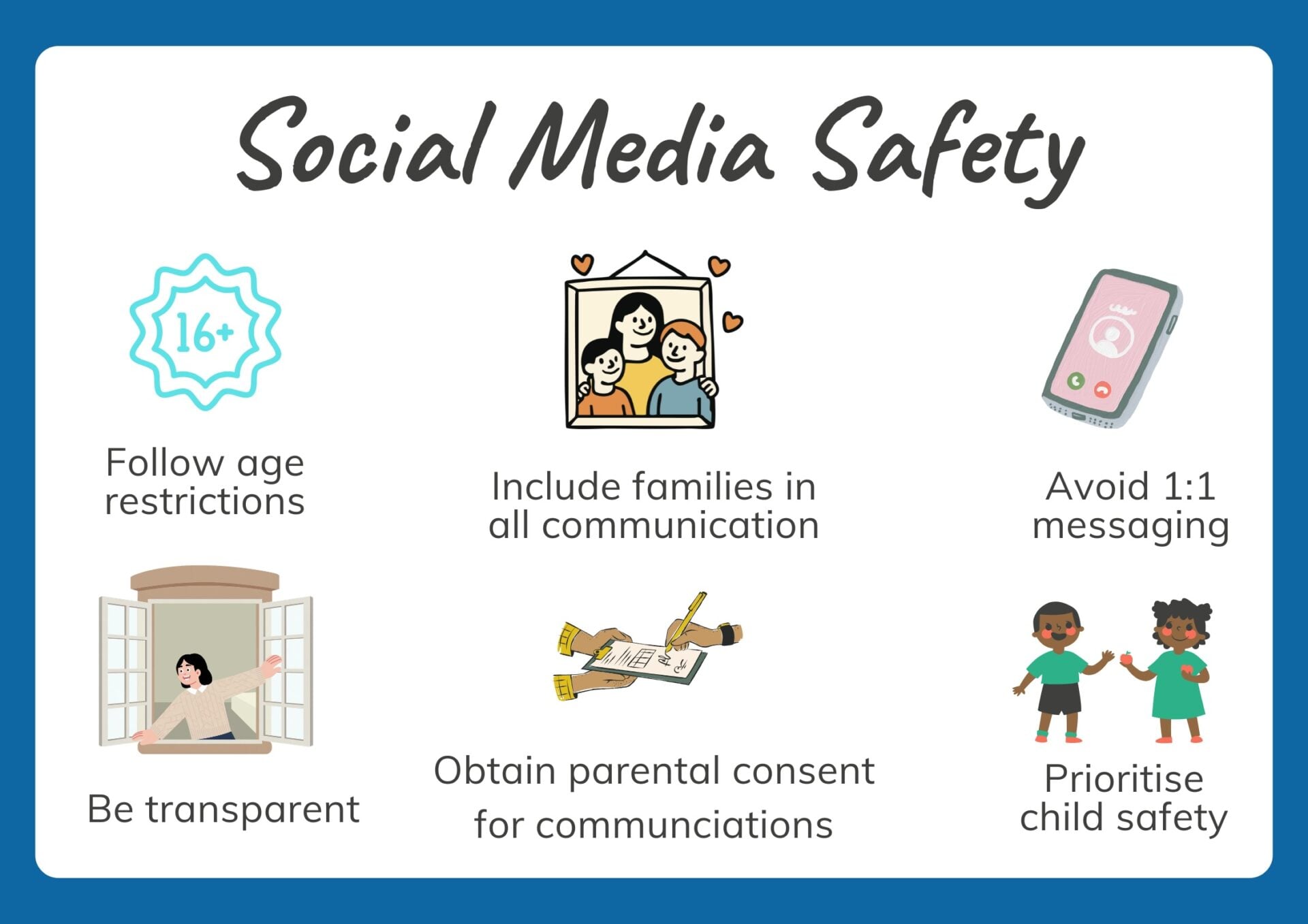
Kooyoora’s guidance translates these principles into straightforward practices any organisation can adopt:
- Follow age restrictions: Use approved, structured platforms. Platforms primarily focused on education, messaging, or professional networking are excluded from the SMMA restrictions. Tools like Google Classroom or Zoom offer structured, safe environments without social media-style features. Kooyoora provides detailed guidance on setting up Google Classroom safely for youth groups.
- Keep parents in the loop: Parents or guardians should always be included in group communications with young people. In a WhatsApp group for a youth ministry, for example, at least one parent or guardian from each family should be a member.
- Avoid one-on-one messaging: Direct, private messaging between adults and young people should not happen on social media or messaging apps. If a one-to-one message is unavoidable, a parent or guardian must be copied in, and a record kept.
- Be transparent: Assign a designated person to oversee online communications, regularly review that messages are age-appropriate and respectful, and ensure there is a clear process for reporting any breaches to your Safeguarding Officer.
- Obtain written consent: Written parental consent should be sought before any young person is included in online group communications, whether via group chat, email distribution list, or video call platform. Kooyoora provides ready-to-use consent form templates.
- Prioritise Child Safety: All follow practices that emphasise child safety embedded in leadership, children’s empowerment and participation, active family involvement, and the maintenance of safe online environments.
Platforms to use — and platforms to avoid
The new regulations specifically restrict platforms such as Facebook, Instagram, TikTok, Snapchat, and YouTube from being used by under-16s. Churches and youth groups should not be using these platforms to communicate with young people, regardless of the new laws.
WhatsApp sits outside the restrictions because its primary purpose is messaging rather than social networking — but this does not mean it can be used without safeguards. Group chats must include parents and be monitored by a designated staff member.
For structured, ongoing youth engagement, Kooyoora recommends considering Google Classroom as an alternative. It requires secure login, allows parents to be added as guardians who receive regular activity summaries, and has no social media-style features such as public profiles or follower counts. It also complies with Australian privacy law.
Kooyoora’s guidance is a practical starting point. The templates and checklists in their fact sheet can be adopted directly or adapted to your community’s specific needs.
Download the Fact Sheet
Kooyoora’s free fact sheet, Social Media Communication with Young People, available to download at: kooyoora.org.au/s/Kooyoora-Factsheet_Communicating-with-young-people.pdf
Further Reading
- Kooyoora: Are Your Online Conversations with Young People Safe?
- eSafety Commissioner: Social Media Minimum Age Regulatory Guidance
- Australian Human Rights Commission: National Principles for Child Safe Organisations
- Google for Education: Google Classroom Overview
Guidance based on Kooyoora’s Social Media Communication with Young People fact sheet (September 2025). Visit www.kooyoora.org.au for more information.